The hidden carbon cost of MDF waste
1st October 2025
Medium Density Fibreboard is one of the most widely used materials in modern manufacturing. Its popularity comes from being versatile, affordable and easy to work with, and it appears everywhere from furniture and kitchens to shopfitting and packaging. The scale of its use is enormous, with millions of tonnes produced globally each year. While MDF has transformed how industries source and use wood, there is a less visible side to the story. Behind its smooth surface and efficiency lies a significant end of life impact that often goes unnoticed – the carbon cost of MDF waste.
MDF is produced by breaking wood down into fibres and bonding them together with resin. This process not only consumes energy but also locks in the carbon already present in the original timber. At the end of its life cycle, MDF does not follow the same simple recycling path as cardboard or other paper-based products. Instead, most of the waste MDF is either sent to landfill or incinerated and both options are clearly not sustainable.
Landfill may look like a passive form of disposal but as MDF breaks down it releases methane, a greenhouse gas far more potent than carbon dioxide. According to the IPCC AR5 figures, methane’s impact on global warming is more than 25 times greater than CO₂. Incineration is no better, as it results in the direct release of CO₂ into the atmosphere. In both cases, the embodied energy and the carbon stored in the fibre are wasted. Independent life cycle assessment by Eunomia Research & Consulting shows that replacing incineration with MDF Recovery’s recycling process delivers around an 11% reduction in climate change impacts. When the long-term benefit of locking up carbon is counted, the saving rises to as much as 30–50%.
The scale of the problem is substantial – in the UK alone, hundreds of thousands of tonnes of MDF waste are created every year. With no widespread recycling route available, most of this material still ends up being disposed of in ways that contribute to greenhouse gas emissions. On a global level, where millions of tonnes of MDF are manufactured and discarded annually, the climate cost grows significantly higher.
Counting the hidden impact
Life cycle assessments confirm that MDF has a measurable embodied carbon footprint, with emissions arising from both the energy used in fibre production and the resin that binds the board. What is clear is that every tonne of MDF wasted represents not only the release of carbon at the point of disposal, but also the loss of material that could have displaced virgin wood. This adds further pressure on forests and increases demand for fresh fibre. While precise figures vary depending on the study, the overall picture is consistent. MDF waste contributes a significant but often overlooked burden to carbon accounts, and its true impact is magnified when considered at a national or global scale.
Towards a circular solution
There is a growing recognition across industries that the carbon impact of products cannot be measured only at the point of manufacture. The entire life cycle, including what happens at the end of a product’s useful life, must be considered. That is why the hidden carbon cost of MDF waste needs to be – and is being – addressed.
The answer lies in creating circular solutions that break the link between MDF consumption and disposal. Recycling MDF into high quality reusable fibre extends the life of the carbon already stored in the wood. It reduces the demand for virgin fibre, lowers embodied emissions in new products and keeps valuable material in circulation rather than discarding it. The same study by Eunomia Research & Consulting also found that the process effectively locks away carbon. Each kilogram of MDF recycled through MDFR can retain around 0.07 kg of carbon, equal to a storage credit of 0.259 kg CO₂e per kg if that carbon stays stored for a century.
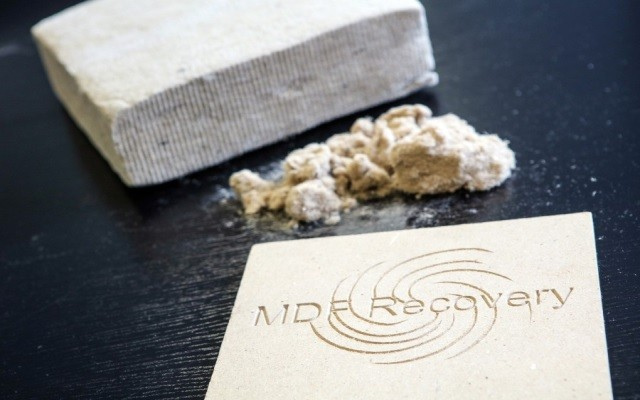
MDF Recovery has developed technology designed to do just that – by recovering clean fibre from waste MDF, it is possible to create a resource with quality comparable to virgin wood. This approach opens the door for manufacturers to cut embodied emissions and secure a reliable supply of sustainable fibre. When waste MDF is recycled into insulation, the process can store the equivalent of 1.73 kg of CO₂ per functional unit of insulation performance, keeping that carbon out of the atmosphere for the life of the building. It also helps businesses demonstrate progress against ESG reporting and carbon reduction commitments.
As regulations tighten and carbon reporting frameworks become more rigorous, the spotlight will inevitably fall on areas that have been overlooked. MDF waste is one of those areas and tackling it will not only reduce emissions but also reshape how the industry views responsibility for the full life cycle of materials. For manufacturers, furniture makers and retailers, this represents both a challenge and an opportunity. By acting on the hidden carbon cost of MDF waste today, businesses can take a step towards future proofing their operations and playing a meaningful role in cutting global emissions.